Why Modern Businesses Need More Than Just a Website in 2026
A modern business website is no longer just an online brochure. In 2026, businesses need websites that support lead generation, customer engagement, automation, content management and digital growth. The most successful companies are building websites that function as connected business platforms rather than static pages.
The Role of Business Websites Has Changed
Years ago, many businesses only needed a simple website with contact details and a few service pages. Today, customers expect much more. A website now plays a central role in marketing, branding, customer experience and operational efficiency.
Modern websites are expected to support lead generation, content publishing, mobile responsiveness, search engine visibility, integrations and interactive customer experiences. Businesses that rely on outdated websites often struggle to compete in a digital-first market.
Why User Experience Matters More Than Ever
Website visitors make decisions quickly. Slow loading pages, confusing navigation and inconsistent layouts can reduce trust almost immediately.
A professional business website should feel clear, responsive and easy to navigate across all devices. Strong user experience design helps businesses improve engagement, increase enquiries and reduce bounce rates.
Important user experience elements include:
- Fast page loading speed
- Mobile-friendly layouts
- Clear navigation structure
- Consistent branding
- Strong visual hierarchy
- Accessible design practices
Content Is Still One of the Strongest SEO Tools
Search engines reward websites that consistently publish useful, relevant and structured content. Businesses that invest in content marketing often improve search visibility, authority and long-term organic traffic.
Blog articles, landing pages, case studies, industry insights and service pages all contribute to stronger SEO performance. A website platform should make it easy for businesses to publish and manage content without relying heavily on developers.
Modern content management systems help businesses organise pages, update content quickly and maintain SEO best practices across the site.
Why Website Flexibility Is Important for Growing Businesses
Businesses evolve quickly. Services change, marketing campaigns shift and customer expectations continue to grow. A rigid website can slow down updates and create unnecessary development bottlenecks.
Flexible website platforms allow businesses to:
- Create new pages quickly
- Launch landing pages for campaigns
- Update layouts without rebuilding the site
- Add interactive content sections
- Manage blogs and SEO content internally
- Scale website functionality over time
Modern Websites Should Support Business Workflows
Websites are increasingly connected to broader business systems. Instead of existing separately, websites now integrate with CRM platforms, proposal systems, booking tools, analytics platforms, marketing automation and customer communication workflows.
Businesses benefit from websites that can connect content, customer interactions and operational processes into a more unified digital experience.
Why Website Performance Affects Conversions
Website performance directly influences customer behaviour. Slow websites can reduce engagement, increase abandonment and negatively impact search rankings.
Performance optimisation includes:
- Optimised images and assets
- Responsive layouts
- Efficient code and scripts
- Fast hosting infrastructure
- Clean front-end rendering
- Reduced unnecessary page weight
Faster websites create smoother customer experiences and improve conversion opportunities.
The Rise of Visual and Interactive Website Experiences
Modern websites are becoming more visual, dynamic and interactive. Businesses increasingly use animation, motion design, interactive sections and visual storytelling to improve engagement.
These experiences should support usability rather than distract from it. Thoughtful interactions can help guide visitors through services, explain complex information and improve overall perception of the brand.
Why Businesses Need Better Website Management Tools
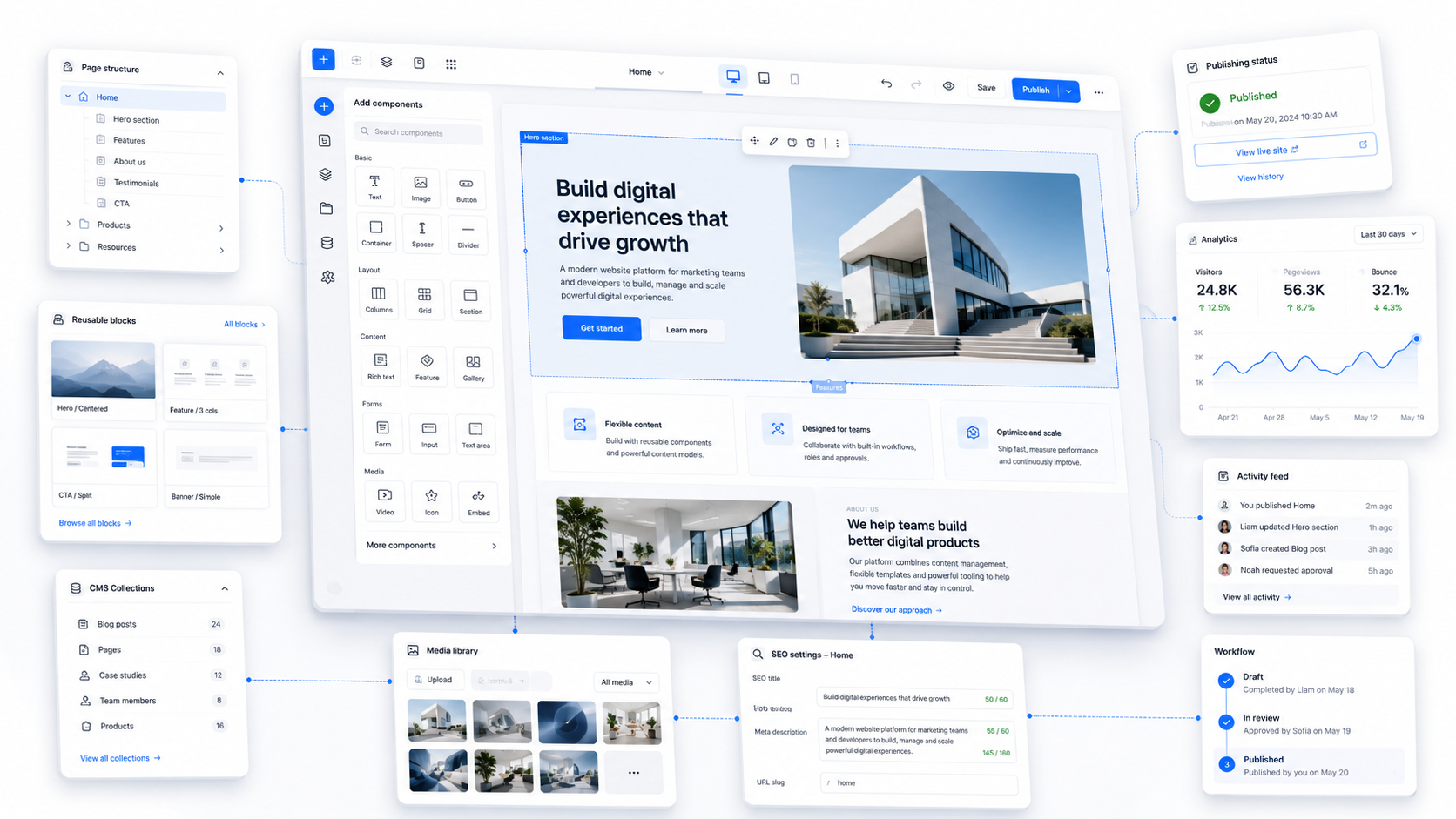
Many businesses want greater control over their websites without needing to edit raw code for every update. Website management platforms help teams update content, manage layouts and maintain branding more efficiently.
A strong website platform should make it easier to:
- Manage content visually
- Build responsive layouts
- Maintain consistent design systems
- Publish blogs and landing pages
- Support SEO best practices
- Scale digital experiences over time
Building a Website That Supports Long-Term Growth
A website should not only support current business needs. It should also create room for future growth. Businesses often expand their services, marketing strategies and digital capabilities over time.
A scalable website foundation makes it easier to add new functionality, improve customer experiences and adapt to changing market expectations without rebuilding the entire platform from scratch.
Final Thoughts
In 2026, successful business websites are no longer static digital brochures. They are flexible business platforms designed to support marketing, customer engagement, SEO, content management and operational workflows.
Businesses that invest in modern website experiences are better positioned to improve visibility, strengthen credibility and create smoother customer journeys across every stage of the digital experience.
Platforms like WebDirector help businesses build, manage and scale modern websites with greater flexibility, visual control and long-term adaptability.